The World Buddhist University (WBU) Conference in Pattaya


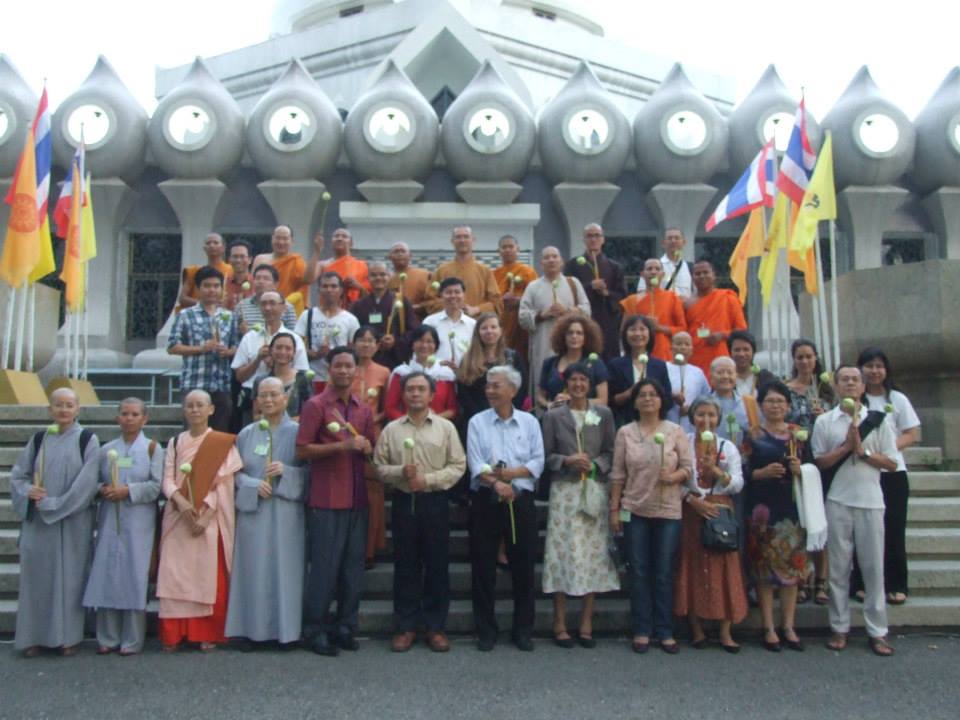
The World Buddhist University (WBU) hosted an international conference with the theme “Buddhist Studies in AEC” from 10 till 13 July, B.E. 2557 (2014) at the College of Innovation, Thammasat University in Pattaya, Thailand. The main objective of the conference was to create a specific network and cooperation with healthy academic intercourse among Buddhist scholars in the ASEAN Economic Community (AEC) and Australia, and as part of the preparation to welcome and celebrate the establishment AEC in the year 2015. The whole duration of the conference was well organised with a welcoming dinner on 10th, the conference proper on 11th and a guided tour to temples and a turtle conservation centre on 12th. There was good food and luxurious accommodation at the scenic and serene learning resort. It was well attended by sixty over delegates from WBU affiliated institutions and Buddhist organizations of ASEAN countries namely Thailand, Vietnam, Cambodia, Indonesia, Singapore and Malaysia with special delegates from China, Australia and Columbia. The International Buddhist College (IBC) sent many participants to support the Conference.
The Master of Ceremony was Dr. Chris Stanford from WBU. The Opening Ceremony Report was delivered by Dr. Tavivat Puntarigvivat, the Conference Organiser of WBU. The Opening Address and welcoming speech to delegates and honourable guests by Professor Norannit Setabutr, Rector of WBU was read by Dr. Pataraporn Sirikanchana in his absence.
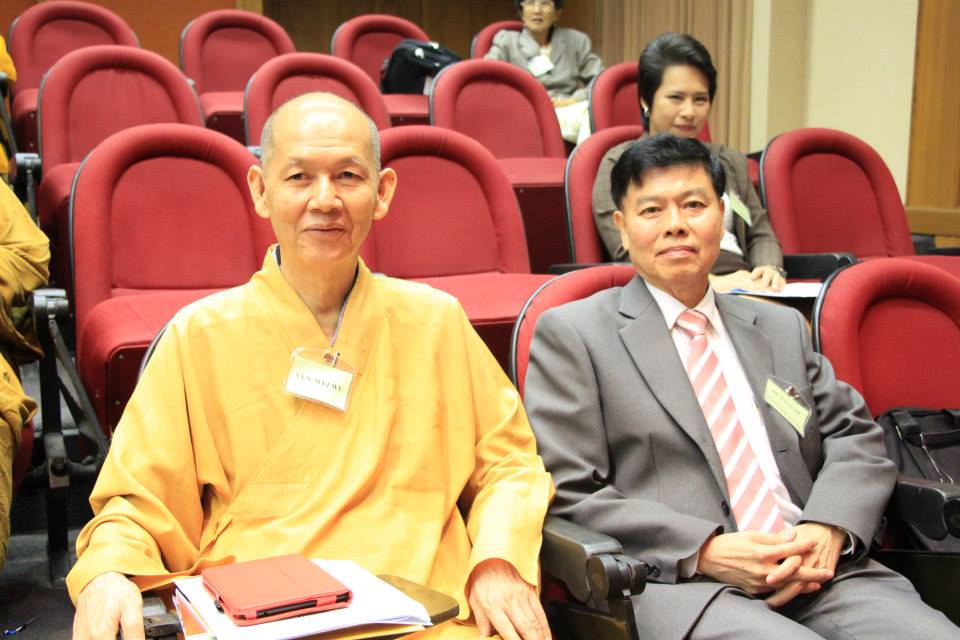
The Keynote Speech on “Buddhist Studies in AEC” was given by Ven. Dr. Wei Wu, abbot of Than Hsiang Temple in Penang, founder of IBC and Chairman of International Buddhist College Council.
In his address, the Venerable touched on the Christian religious crises in the west which forced the Christians to shift their resources to Asia. Over the last couple of decades, Christianity has established its influence in South Korea. This implies that the next target is China and ASEAN. The Venerable is concerned that Buddhists in ASEAN have little crisis-consciousness and Buddhism is losing its appeal to the youths of ASEAN but Christianity has made significant inroads into the poor villages in many ASEAN countries.
Buddhist monasteries used to provide the best education and parents of old send the best among their children to these monasteries to become monks and receive good education but this is no longer the case. The general level of education of lay Buddhists has risen but the Buddhist monks’ educational level has lagged behind. So he is very concerned that in future the monks will not be able to retain the respect of lay Buddhists if the present situation is not arrested.
He also highlighted on the gigantic economic potential of China. Many Chinese are now hungry for spiritual things and Christianity has gone into China very agressively. There is a big opportunity in China today for Buddhism.
The morning plenary was addressed by Dr. Taviavat, a distinguished Buddhist scholar and practitioner who is currently the Director of the Institute of Research and Development at the WBU in Bangkok. He spoke on the syncretistic nature of Buddhism in Southeast Asia with elements from Animism and Brahmanism. In the past, Brahmanism and Buddhism had competed and exerted its influence especially in the Kingdoms of Khmer, Srivijaya and Majapahit . He also touched on the three major forms of Buddhism – Theravada, Mahayana and Vajrayana. He said Buddhism over time has developed its own characteristics in each of the ASEAN countries. And now the intra-religious dialogue among Buddhists in ASEAN will contribute to the peace and harmony of the region.
After the coffee break, a panel discussion on “The Cooperation for Buddhist Studies in AEC” spearheaded by Assoc. Prof. Dr. Pataraporn Sirikannchana, WBU.
In the afternoon the plenary sessions were divided into four closely related themes. The papers which were presented for discussion by their respective speakers were as follows.
Theme A: Buddhism in AEC
1. Buddhist Ethics and Its Relevance in Southeast Asian Society by Rev. Dr. Nguyen Thi Cam Nhung (Vietnam, Gia Lai Buddhist University)
2. Buddhist Activism in Singapore by Jack Meng-Tat Chia (Singapore, Cornell University)
3. A Case Study on Inevitability Consequence of AEC from Buddhist Perspective by Ms Swe Swe Mon (Myanmar, ITBMU)
4. Buddhist Education with Emphasis on Kindergarten Education by Ven. Dr. Wei Wu (Malaysia, IBC Council Chairman)
5. Buddhist Teacher Education in Indonesia: One of the Improvements of Buddhist Studies by Ven. Budi Utomo Ditthisampanno (Indonesia, Principal, Smaratungga Buddhist College)
Theme B: Buddhism, Conflict Resolution and Modernity
6. The Survival of Buddhism in the Dark Ages of Cambodian History by Mr. Sokkhim Dim (Cambodia, IBC Alumni)
7. Buddhist Solution(s) for Conflict Transformation by Dr. Anja Zalta (Australia, Assistant Professor, Nan Tien Institute)
8. Philosophy of Buddhist Humanism: Buddhism and Persons with Disabilities by Dr. Voranong Kowitsthienchai (Thailand, Ratchasuda College, Mahidol University)
9. Buddhism for the Global Benefits and its Challenges in Modern Times by Mr. Tan Poh Beng (Malaysia, IBC)
Theme C: Buddhism, Meditation and Psychology
10. Personality Development: A Psychological Analysis of Āhāra by Ven. Dr. Naw Kham La Dhammasami (Myanmar, MCU)
11. Western Engagement with Mindfulness by Dr. Kathleen Gregory (Australia, La Trobe U)
12. Towards Buddhist Meditation in Buddhist Education by Ms. Soong Wei Yean (Malaysia, IBC Alumni)
13. Significance of Abhidhamma in Relation to the Path of Liberation by Ven. Pandava (Myanmar, MCU Ph.D. Candidate)
Theme D: Buddhism and Socio-Economics
14. The Happiness Paradox in Western Economics: A Buddhist Explanation by Dr. Soontaraporn Techapalokul (Thailand, MCU Special Instructor)
15. Buddhist Middle Way Theory and Models of Industrial Relations by Dr Chokchai Suttawet (Thailand, Mahidol U)
16. Buddhist sustain able development through Inner Happiness by Dr. Sauwalak Kittiprapas (Thailand, International Research Associates for Happy Societies (IRAH)
17. Peaceful Coexistence for Economic Growth by Mr. Phyu Mar Lwin (Myanmar, ITBMU)
After the plenary session all delegates and participants gathered back in the main auditorium to hear the reports from the four moderators and participate in the closing ceremony with the issuance of certificates of appreciation. Ven Dr. Wei Wu kindly offered to host the next conference in Penang in 2015 which was gratefully accepted by all.
The outcome of the conference was new friendships were forged. A network of Buddhist scholars was set up and important contacts were made especially with researchers from Australia. In conclusion, the conference was a great success and I was able to achieve my objectives as I gained an overview of different aspects of Buddhism and how it can be applied in the economic and social fields of ASEAN countries. I made some new contacts and along the way renewed old friendships. Finally I am grateful to Ven. Wei Wu and Dr. Tavivat for granting me the opportunity to participate and I have benefitted much from this experience.