
Questions and Answers by Professor Jamspal


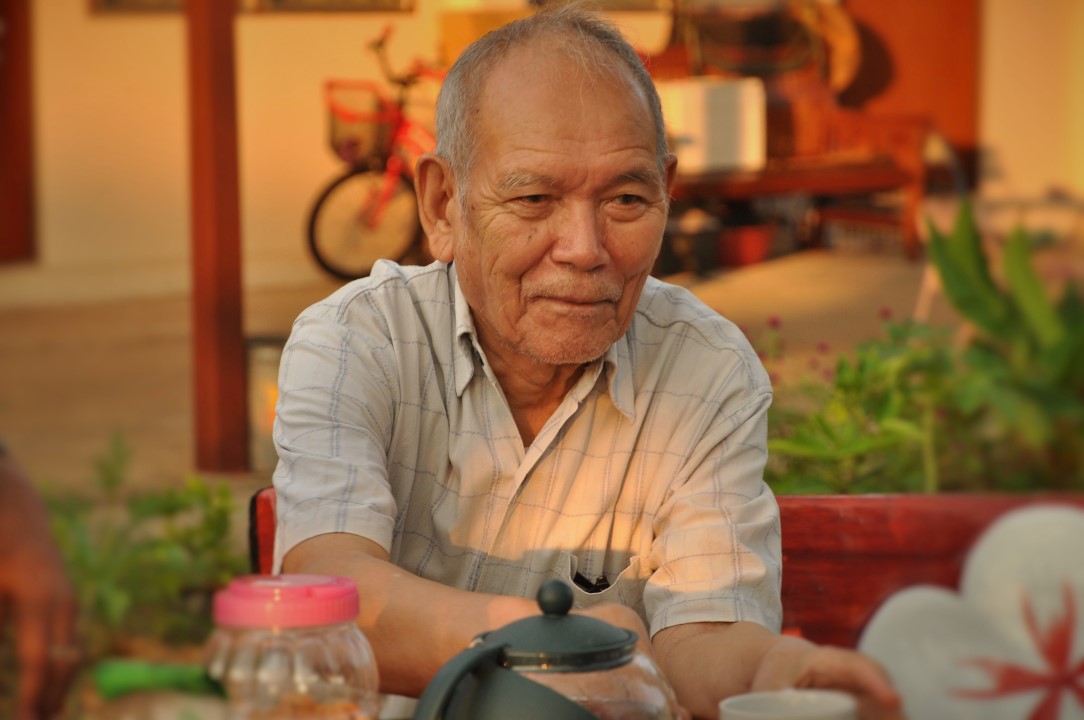
1. Please tell us more about yourself.
My name is Lozang Jamspal, I was born in Basgo Village in Ladakh in 1933. I am culturally Tibetan and nationally Indian. In 1944, I went to Likir Monastery to receive Tibetan Buddhist monastic education. In 1950, I joined Tashilhunpo Monastery, Zhikatse, Tibet to obtain higher monastic education. I was there for 7 years. In 1958, I joined Varanasi Sanskrit University to learn Sanskrit and Modern Hindi, Indian national language. I obtained a Diploma in Sanskrit, a Śāstrī Degree (BA) and a Master degree in Ācārya (MA). While I was studying for the degree of Śāstrī and Ācārya, I worked in the Library of the University by cataloguing Tibetan books. Besides that, I was a Tibetan language Instructor in the same University. In 1968, I successfully obtained an Ācārya degree.
Due to my volunteer service, I was appointed as a teacher of Indian Buddhist literary scriptures translated into Tibetan language. I was fortunate to translate the conversations of Indian and Tibetan scholars, including His Holiness the Dalai Lama. In 1972, Delhi University appointed me as a lecturer in Sanskrit and Tibetan literature. In 1974, I went to USA on the invitation of Lamaist Buddhist Monastery to teach Buddhism and to assist the translation of the Monastery. The Monastery got some grants from Mr. C.T. Shen, a rich and generous Chinese from the mainland China. In 1984, I went to Columbia University to study Buddhism in the western way. I got a Tibetan language teaching job from the outset, scholarships and grant from Nataritasan, Japan while I was a student in Columbia University to edit Sanskrit root text and Tibetan translation of Viśvalocana (Lexicon). In 1991, I obtained my PhD in Indo-Tibetan studies. Since then I have been teaching Tibetan and Sanskrit language. I was a lecturer in Columbia University in my early years of teaching.
2. When did you join IBC and how?
I joined IBC in July 2012 on the invitation of IBC founder, Venerable Dr. Wei Wu.
3. Do you only teach Buddhism academically or do you also practice? Would you mind to share your main practice?
It is hard to answer. If one has a good mind, honesty, effort etc., his or her academic teaching of Buddhism would incorporate Buddhist practice. There is a story in some Lam Rim books. One was circumambulating a temple, a teacher told the one, circumambulating temple is good, but better practice the Dharma. The one worship in a temple, the teacher said worship in a temple is good, but practicing the Dharma is better. The one started meditating, the teacher said meditating is good, but r doing Dharma practice is better. The one did not know what to do. The teacher told him that purifying your mind is the Dharma practice as by purifying the mind, one will become pure.
4. How do you handle if you face a difficult situation with students or in the environment which you work?
I have a thought that the situation is impermanent. Although today might be difficult for us, tomorrow it will be gone. According to Buddhism, one could be better if one could contemplate selflessness and emptiness. However, for ordinary people, it is difficult to have a realization of selflessness and emptiness.
5. What is the most significant book that you have read in the last one-year?
I don’t have any particular book of significance that I have read in the last one-year, but in general Bodhicaryāvatāra (The Bodhisattva Way of Life) of Śāntideva of the 8th century is excellent. For example some statements quoted from this book “The body of people only must be used. Chapter 5. Verse 66”:
One should be skillful and endowed with vigor,
One must always perform one's own work.
In all undertakings also,
One must not depend upon others. [ 82 ]
6. Describe IBC in your own words.
IBC is founded by the skillful means of Venerable Dr. Wei Wu and many generous people for the sake, benefit and happiness of many people. IBC’s prominence depends on the teachers and students. Other people can tell whether IBC is good or bad. I always tell the students that they should make their college perfect and be proud of it. IBC is a higher Buddhist institution where you will be graduated from. With the knowledge you gained from IBC, eventually you have the opportunity to share and perform your knowledge and skill in some other places.
7. What lessons have you learnt from your life? Please share your advice based on those lessons.
Being right diligent with associating right person, I have achieved my goal. I am not intelligent to achieve my goal, but making an effort to get the goal. Once my late youngest brother told me, you are not intelligent, but diligent. Diligence is better than intelligence. Therefore, one should be diligent to achieve one’s goal.
